

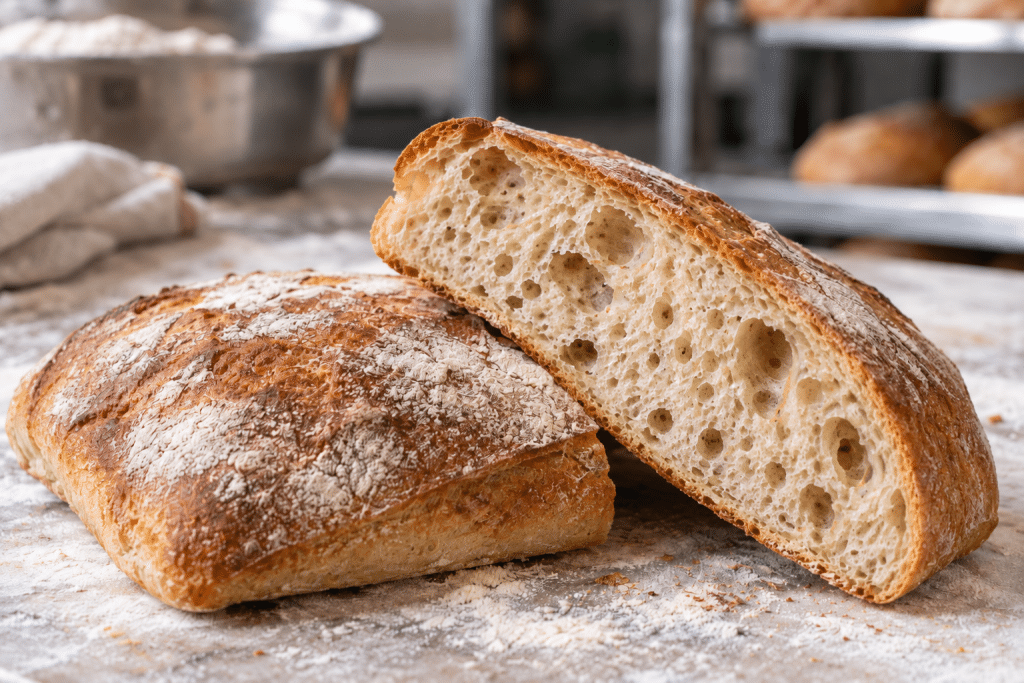
Ciabatta is an Italian bread recognized for its low, broad shape, open and irregular interior, and chewy crust. The name means “slipper” in Italian, describing the loaf’s silhouette. Ciabatta can be baked as full loaves or individual sandwich portions, making it a versatile format for cafes, delis and restaurants. For a comparison with another popular Italian bread, see focaccia vs. ciabatta.
At a Glance
Key Takeaways
- Ciabatta is defined more by its airy crumb, crust, and broad shape than by one universal size.
- Its open interior and sturdy exterior make it especially useful for sandwiches and pressed applications.
- Loaves, squares, ovals, mini formats, and rolls can serve different menu needs.
- For restaurant use, portioning, slicing, toasting, holding, and filling weight matter as much as flavor.
Ciabatta at a glance

| Characteristic | What to look for | Foodservice impact |
|---|---|---|
| Crumb | Open but structurally useful | Affects sauce containment and bite |
| Crust | Crisp to chewy | Affects pressing and first bite |
| Shape | Broad loaf, square, oval, roll | Controls portion and packaging |
| Thickness | Varies by format | Changes bread-to-filling ratio |
What is ciabatta made of?
A basic ciabatta dough uses flour, water, yeast or another leavening method, and salt. Some formulations also include olive oil or preferments. There is no single ingredient formula that defines every loaf. The process, especially how the relatively wet dough is fermented and handled, influences the bread’s final structure.
Why does ciabatta have large holes?
An open crumb develops when dough produces and retains gas during fermentation and when shaping preserves some of that internal structure. Hydration, flour strength, handling and oven conditions affect the result. Large holes are characteristic of many ciabattas but are not a guarantee of quality in every application: very open bread can leak thin sauces in a sandwich.
What does ciabatta taste and feel like?
Ciabatta is generally mild and wheat-forward, allowing savory fillings to remain prominent. A well-made loaf may have a crisp or chewy exterior and a relatively light interior. Texture changes with time, reheating and storage. Assess the bread at the point it will be served, not only immediately after baking.
| Bread | Typical difference | Common use |
|---|---|---|
| Focaccia | Flatter, often oil-rich and dimpled | Bread service and sandwiches |
| Baguette | Long, often with a pronounced crisp crust | Sandwiches and table bread |
| Pullman | Fine, relatively uniform sliced crumb | Toast and standardized sandwiches |
| Ciabatta | Often irregular crumb with substantial crust | Panini and filled sandwiches |
Best uses for ciabatta in a restaurant
For panini, the bread should withstand heat and pressure while the crumb compresses around fillings. For cold sandwiches, choose a portion that accommodates the intended filling without creating an awkward bread-to-filling ratio. For bread service, slices or smaller rolls may be more practical than a full loaf. Toasted ciabatta can also work as a base for appetizers, provided the serving style suits the crust. Read our panini guide for pressed-sandwich considerations.
How to choose ciabatta for sandwiches
Start with the menu item: What size should the final sandwich be? How wet are the fillings? Will it be pressed, wrapped or held? How long will it sit before the guest eats it? Those questions should guide the choice between a full loaf, individual roll, square or other available format. For format selection, compare ciabatta rolls and loaves in the catalog.
Run a simple test: slice each sample, prepare the actual sandwich, assess after the intended holding period, and repeat after heating when relevant. Record whether the crust becomes too tough, sauces leak, or the sandwich retains a comfortable serving size.
Ciabatta rolls versus full loaves
Individual portions can support repeatable sandwich sizes and reduce prep decisions. Loaves offer flexibility when a kitchen needs different cuts, but require consistent slicing procedures. Neither is inherently more cost-effective; compare the number of usable portions and waste generated from each format.
How to store and refresh ciabatta
For plain bread, protect it from unnecessary air exposure, plan quantities around the service schedule, and consider freezing surplus bread while it is still fresh. Refrigeration can accelerate bread firming, although cold storage may be required for prepared sandwiches containing perishable ingredients. Reheat only sound bread, and use a method suited to the crust and serving application. For serving advice, see how to reheat ciabatta.
Ciabatta at Il Forno
Il Forno lists ciabatta options in its wholesale catalog. The product pages can help buyers identify available types, while final size, delivery and specification questions should be confirmed through the bakery. An original image of an Il Forno ciabatta sliced open would materially improve this article by showing the real crumb and crust.
For Foodservice Businesses
Need ciabatta for panini, cafe sandwiches or bread service?
Explore the current Il Forno bread catalog to compare available formats. For wholesale product, account, or delivery questions, submit a quote inquiry; availability and route eligibility are confirmed by the bakery.
Discuss Ciabatta for Sandwiches