

At a Glance
Key Takeaways
- Panini bread needs enough structure to handle pressure without turning tough.
- An airy crumb can compress around fillings and reduce excessive breadiness.
- Bread thickness, filling moisture, and press time need to be tested together
- For service, consistency of size can matter as much as the bread style itself.
Why Ciabatta works so well for Panini?: The Short Answer
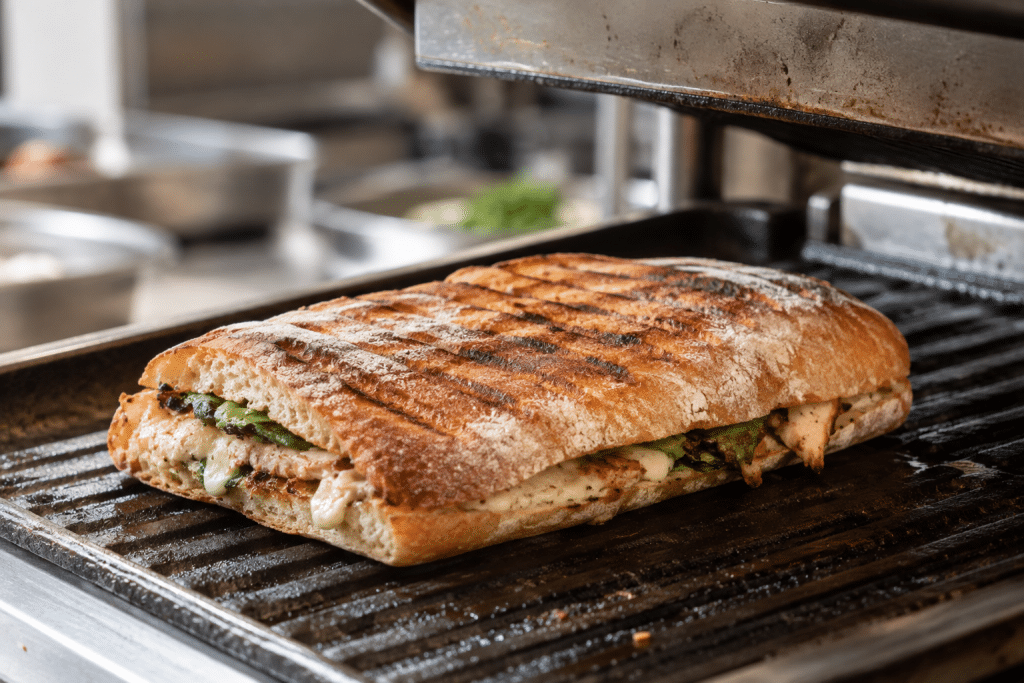
Ciabatta works well for panini because it combines a structured crust with a relatively airy interior. Under heat and pressure, the exterior can crisp while the crumb compresses around the filling instead of becoming uniformly dense. The right ciabatta also needs a size and thickness that fit the press and the finished portion. For professional kitchens, the useful question is not only what the bread is, but how its shape and texture affect prep, service, and the finished menu item.
What a Panini Needs From the Bread
A pressed sandwich changes the bread mechanically and thermally. Pressure flattens the crumb, heat drives moisture, and direct contact with the grill or press firms the exterior. Bread that starts too soft may collapse, while bread that starts too hard can become difficult to eat.
Ciabatta is useful because it often begins with enough crust to hold its shape and enough air inside to compress without becoming a solid block.
How the Open Crumb Helps
The irregular interior gives the bread room to compress around cheese, meat, vegetables, and spreads. This can create a more integrated sandwich because the bread conforms slightly to the filling instead of remaining rigid.
However, very large cavities can allow melted cheese or thin sauces to move unevenly. A panini program should test the actual crumb rather than assuming the most open-looking loaf is the best performer.
Why Crust Matters Under Heat
The crust is the point of contact with the press. As it heats, it can become more aromatic and crisp. That texture is one of the defining pleasures of a panini.
But the crust needs balance. If the starting crust is already thick and firm, additional pressing can make it too hard. A successful panini bread should remain biteable after the full cooking cycle.
Bread Thickness and Press Performance
Thicker bread can protect fillings and create a substantial sandwich, but it may also require more compression and longer heating. Thinner bread warms faster and can produce a cleaner ratio of bread to filling, but it has less margin for very heavy builds.
The best thickness is therefore menu-specific. Measure the finished sandwich, not just the unpressed bread.
Managing Moisture
Cheese, tomatoes, grilled vegetables, pesto, dressings, and proteins all contribute moisture. Some of that moisture is desirable because it softens the interior. Too much can weaken the bottom crust or escape through an open crumb.
Operators can manage this by controlling sauce quantity, placing moisture-rich ingredients away from the bread surface when possible, draining vegetables, and choosing a ciabatta crumb appropriate for the build.
Portioning for a Busy Lunch Service
A good panini format should fit the press, fit the packaging, and produce a repeatable portion. Uneven lengths or thicknesses can create inconsistent cook times and guest experience.
For high-volume cafés and delis, a square, oval, or individual roll may simplify prep. Larger ciabatta can work when the kitchen prefers to cut portions in-house. Both approaches are valid if the process is controlled.
When Another Bread May Be Better
Ciabatta is not automatically the right bread for every pressed sandwich. Focaccia may be preferable for a softer, oil-rich profile. A softer roll may suit a breakfast sandwich that should remain tender. A baguette-style bread may suit a narrower, crisper build.
Bread choice should support the menu concept rather than becoming a rule based on the word panini.
Using Il Forno Ciabatta in a Panini Program
Il Forno lists multiple ciabatta formats in its current catalog. A professional kitchen can compare those formats around press dimensions, filling weight, portion target, and service method, then request samples or account information for the most relevant options.
For the fundamentals behind the bread itself, start with our What Is Ciabatta Bread? guide.
For Foodservice Businesses
Choosing ciabatta for a menu?
Review the relevant Il Forno catalog formats, then use the quote inquiry form to discuss the application, expected volume, product specifications, samples, account requirements, and current route eligibility.
Discuss Ciabatta for Sandwiches