

At a Glance
Key Takeaways
- Oven-style heat is the most reliable way to refresh crust and warm the crumb evenly
- A press or skillet is useful when the bread is already part of a sandwich.
- Microwaves prioritize speed over crust quality.
- Reheat only what will be served soon to avoid repeated drying.
How to reheat Ciabatta with ruining the crust: The Short Answer
The best way to reheat plain ciabatta is usually with dry oven or toaster-oven heat, which can warm the crumb while restoring exterior crispness. A skillet or sandwich press can work well for cut pieces and finished sandwiches. Microwaving is fast but tends to soften the crust, so it is usually a weaker choice when texture matters. For professional kitchens, the useful question is not only what the bread is, but how its shape and texture affect prep, service, and the finished menu item.
What Reheating Is Trying to Fix
As ciabatta sits, the crust may soften and the crumb may firm. Reheating can improve both sensations for a limited period by driving moisture from the surface and warming the interior.
The goal is not simply to make the bread hot. Excess heat can dry the crumb and harden the crust. Successful refreshing uses enough heat to improve texture without overbaking.
Oven Method
An oven is useful for whole loaves or multiple portions because heat surrounds the bread. Moderate-to-high dry heat can restore crispness while warming the interior more evenly than a microwave.
The exact time depends on bread size, starting temperature, and oven characteristics. A restaurant should establish its own tested service standard rather than copying one universal time.
Toaster Oven Method
A toaster oven provides similar advantages on a smaller scale and can be practical for cafés with lower volume. It works especially well for individual portions that need to be refreshed close to service.
Watch small pieces carefully because they have more surface area relative to their mass and can dry faster than a full loaf.
Skillet or Griddle Method
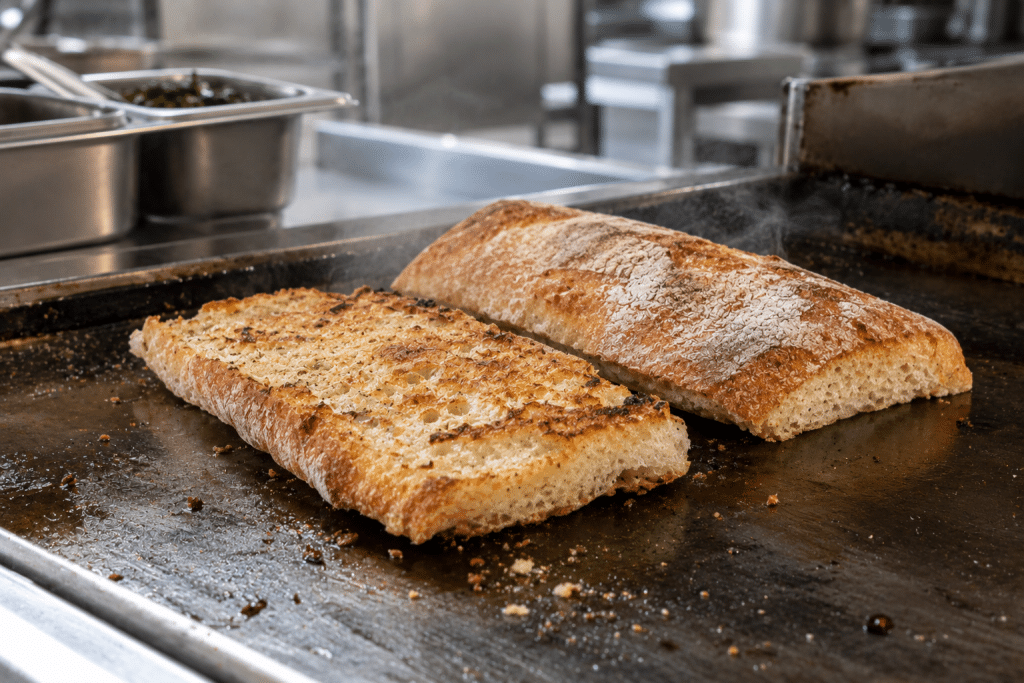
A skillet or flat top is useful when the bread is split. Direct contact can crisp the cut surface quickly, which is valuable for sandwiches with moist fillings.
This method changes the bread differently from whole-loaf reheating because only the contact surfaces receive intense heat. It is best treated as part of sandwich preparation rather than as a general storage remedy.
Panini Press Method
For a finished ciabatta sandwich, the press can reheat the bread and filling at the same time. The pressure also reduces the crumb height and increases crust contact with the heated plates.
Because pressing can make the crust firmer, use a bread thickness and press cycle that keep the final sandwich biteable.
Microwave: When Speed Matters More Than Crust
A microwave can warm ciabatta quickly, but it does not recreate a crisp crust. The bread may feel soft immediately and then firm as it cools.
For a professional kitchen where texture is part of the menu promise, oven, griddle, or press methods usually provide better control. A microwave can still have a role when speed is the only priority.
Reheating From Frozen
Frozen ciabatta can be thawed and then refreshed, or in some operations warmed from a frozen state depending on size and equipment. The kitchen should test the method with its exact bread format so the center warms before the exterior becomes too dark or dry.
Portioning before freezing can make the process easier because smaller pieces thaw and refresh more predictably.
Restaurant Service Considerations
Build one standard procedure for each menu application. A sandwich station should know whether bread is served as-is, toasted cut-side, or pressed after assembly. That consistency matters more than chasing the theoretical perfect reheating technique.
Storage and reheating work together as one quality-control system. If the bread is firming too quickly or the crust is losing texture before service, review our guide to storing ciabatta before changing the reheating method.
For Foodservice Businesses
Choosing ciabatta for a menu?
Review the relevant Il Forno catalog formats, then use the quote inquiry form to discuss the application, expected volume, product specifications, samples, account requirements, and current route eligibility.
Discuss Ciabatta for Sandwiches