

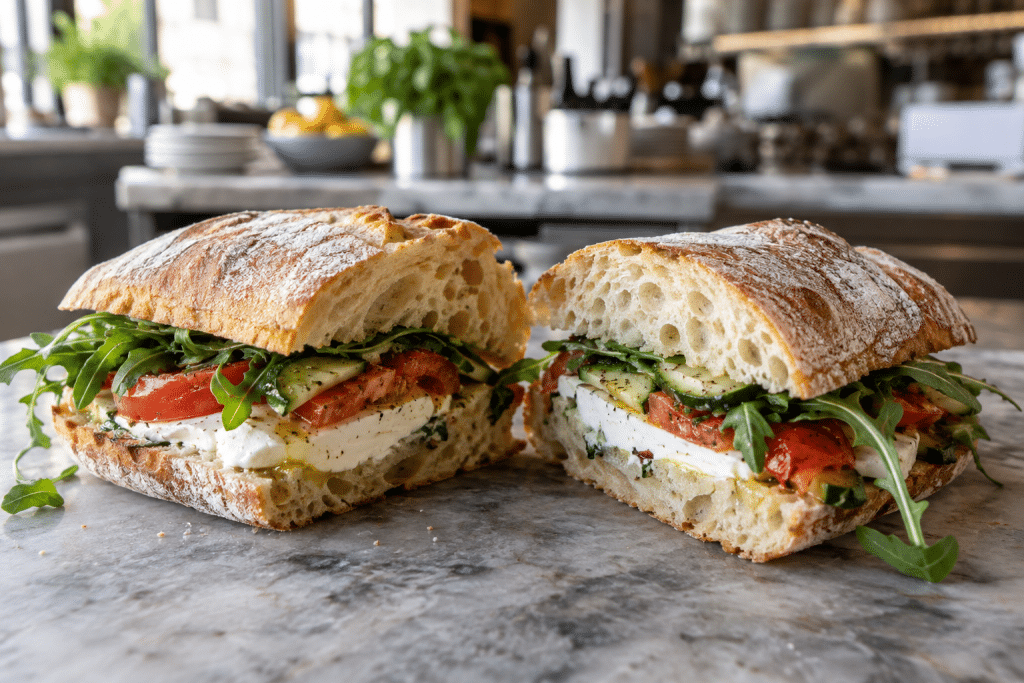
At a Glance
Key Takeaways
- Ciabatta is defined more by its airy crumb, crust, and broad shape than by one universal size.
- Its open interior and sturdy exterior make it especially useful for sandwiches and pressed applications.
- Loaves, squares, ovals, mini formats, and rolls can serve different menu needs.
- For restaurant use, portioning, slicing, toasting, holding, and filling weight matter as much as flavor.
Is Ciabatta Good for Sandwiches?: The Short Answer
Yes. Ciabatta can be excellent for sandwiches because its crust gives structure while its open crumb keeps the bite lighter than many dense rolls. The best result depends on choosing the right size and crumb for the filling, sauce level, heating method, and holding time. For professional kitchens, the useful question is not only what the bread is, but how its shape and texture affect prep, service, and the finished menu item.
Why Ciabatta Works for Sandwiches
A sandwich bread needs to perform three jobs at once: contain the filling, contribute texture, and stay comfortable to eat. Ciabatta often does those jobs well because the outer crust provides strength while the interior remains relatively light.
The bread also responds well to heat. Toasting or pressing can increase crispness and create contrast with warm fillings. That is one reason ciabatta appears frequently on café and lunch menus.
Crumb Openness: More Is Not Always Better
Large irregular holes are part of ciabatta’s visual identity, but sandwich performance is more complicated. If the crumb is extremely open, thin sauces, oil, or dressing may migrate through the bread. Small fillings can also fall into larger pockets.
For a high-volume sandwich program, a moderately open crumb may offer a better balance between artisanal texture and practical containment. Test the bread with the actual sauces and fillings before committing to a format.
Crust Strength and Bite
A crust that is too soft may compress under a heavy filling. A crust that is too hard can make a sandwich difficult to bite cleanly. Good sandwich ciabatta should support the build without forcing the guest to pull against the bread.
Heat changes that balance. A crust that feels gentle when cold may become much crisper after pressing. The final service method should therefore guide product testing.
Match the Bread to the Filling
Light fillings such as fresh mozzarella, tomato, roasted vegetables, or sliced turkey can work with a relatively airy format. Heavier fillings such as stacked meats, grilled chicken, or sauced vegetables may benefit from a slightly sturdier piece of bread.
The goal is proportionality. Too much bread overwhelms the filling. Too little bread allows the sandwich to collapse or leak. Portion trials are more useful than choosing by loaf name alone.
Hot Sandwiches vs. Cold Sandwiches
Hot sandwiches benefit from ciabatta’s ability to toast and crisp, but operators should watch the edges and crust thickness so the bread does not become excessively hard. Cold sandwiches need enough structure to stay intact without relying on heat to firm the exterior.
If the sandwich will sit in a grab-and-go case or travel for delivery, test it after the expected hold period. The bread that tastes best immediately after assembly may behave differently later.
Ciabatta vs. Focaccia for Sandwiches
Ciabatta usually gives a more defined crust and loaf structure, while focaccia often gives a flatter, softer, more oil-rich sandwich. Neither is universally better. A pressed chicken sandwich may benefit from ciabatta’s structure, while a roasted vegetable sandwich may work beautifully on focaccia.
For a side-by-side comparison of crumb, crust, shape, and menu use, read our Focaccia vs. Ciabatta guide. If your decision is specifically about sandwich applications, our focaccia sandwich guide covers the other side of the comparison.
Choosing the Right Ciabatta Format
A square can make portioning predictable. A small oval may work for individual sandwiches. A larger loaf can support slicing or shared applications. Round ciabatta can fit burger-like or breakfast builds. The label matters less than the finished dimensions and how the bread behaves after cutting and heating.
Il Forno’s current catalog includes several ciabatta shapes and sizes, which allows buyers to test formats against their menu rather than treating ciabatta as one fixed product.
Foodservice Testing Checklist
Test one finished sandwich exactly as a guest will receive it. Check filling-to-bread ratio, first-bite resistance, leakage, bottom-crust moisture, slicing consistency, press time, hold performance, packaging fit, and overall appearance.
If the sandwich is a core menu item, repeat the test with more than one employee assembling it. A format that only works when prepared very carefully may create inconsistency during a busy service.
For Foodservice Businesses
Choosing ciabatta for a menu?
Review the relevant Il Forno catalog formats, then use the quote inquiry form to discuss the application, expected volume, product specifications, samples, account requirements, and current route eligibility.
Discuss Ciabatta for Sandwiches