

At a Glance
Key Takeaways
- Focaccia pairs well with foods that benefit from a tender, savory bread: soups, salads, cheeses, cured meats, roasted vegetables, dips, and sandwich fillings.
- Plain or lightly seasoned focaccia is the most flexible; strongly topped focaccia should be paired with dishes that do not compete with it.
- Restaurants can use the same bread across more than one menu position when the format and portioning support it.
- For sandwiches, consider filling moisture, fat, acidity, and weight—not just flavor.
- Catering and hotel programs should also evaluate how the pairing holds over time, not only how it tastes immediately after assembly.
What to Eat With Focaccia: The Short Answer
Focaccia works with soups, salads, antipasti, cured meats, cheeses, roasted vegetables, dips, eggs, and a wide range of sandwich fillings. Its mild wheat flavor and olive-oil character make it especially comfortable around Mediterranean ingredients, but it does not need to stay inside an Italian menu.
The better way to pair it is by function. Is the focaccia soaking up broth? Carrying a sandwich? Adding richness next to a bright salad? Acting as the starch on a shared board? Once the role is clear, the pairing becomes easier.
Soups: Use Focaccia for Texture and Absorption
Focaccia is a natural partner for tomato soup, vegetable soups, bean soups, minestrone-style preparations, and brothy dishes because the crumb can absorb liquid without immediately disappearing.
For restaurant service, portion size matters. A small warm piece can feel intentional next to soup; an oversized square can turn a side into the heaviest part of the meal.
Salads: Add Warmth and Substance
A salad often benefits from a bread that adds warmth, chew, and richness. Focaccia can play the role of a side, be toasted into larger crouton-style pieces, or become part of a composed plate with vegetables and cheese.
Bright, acidic salads pair especially well because the oil-rich bread provides contrast. Think tomatoes, citrus, vinaigrette, bitter greens, or pickled components.
Cheese, Cured Meats, and Antipasti
Focaccia fits naturally on an antipasti or charcuterie-style board. Fresh mozzarella, ricotta, aged cheeses, cured meats, olives, roasted peppers, artichokes, and marinated vegetables all make sense because the bread can carry both fat and acidity.
Keep seasoning in mind. Rosemary or olive focaccia already contributes a strong flavor. Plain focaccia leaves more room for the board itself to lead.
Dips and Spreads
The dimpled surface and tender crumb make focaccia useful for whipped ricotta, hummus, bean spreads, pesto, olive tapenade, roasted-garlic spreads, and flavored oils.
For a restaurant, cutting method changes the experience. Narrow strips invite dipping. Small squares work on shared plates. Larger wedges feel more like bread service.
Sandwich Fillings That Work Well With Focaccia
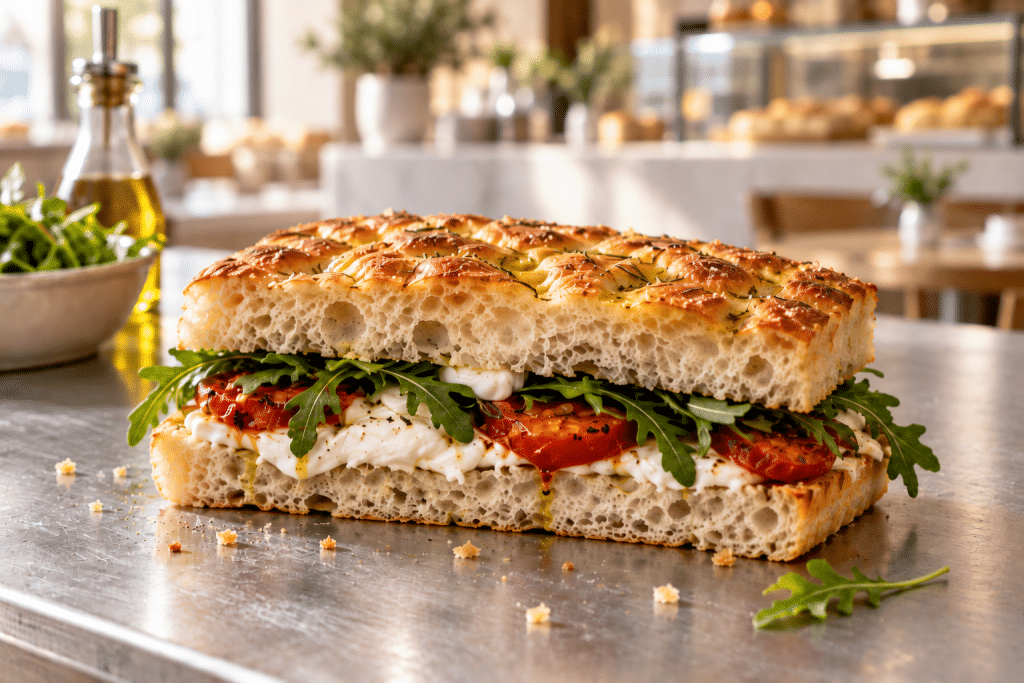
Focaccia can support roasted vegetables, grilled chicken, turkey, cured meats, mozzarella, provolone, burrata-style fillings, tuna, eggs, or composed vegetarian builds. Sauces and spreads can work well too, but very wet fillings should be balanced so the bread does not become saturated before service.
The bread’s own seasoning should be part of the recipe. Rosemary focaccia with an aggressively spiced filling may feel crowded. Plain focaccia gives the kitchen more freedom.
Breakfast and Brunch
Egg sandwiches are an obvious use, but focaccia can also sit alongside baked eggs, breakfast salads, smoked fish, soft cheese, roasted tomatoes, or brunch boards. Toasted focaccia gives a café a more substantial alternative to conventional sliced toast.
For breakfast service, choose a format that heats quickly. A thick piece that is excellent at dinner may slow down a morning station.
Focaccia for Catering and Events
Catering changes the pairing question because food needs to travel and hold. A sandwich that is perfect when served immediately may soften after an hour under a cover. A board may need bread that stays attractive without constant reheating.
Test the complete event workflow: assembly, transport, setup, hold, and service. Focaccia often performs well because it portions cleanly and works at more than one temperature, but the specific format still matters.
Pairing Focaccia by Restaurant Concept
| Bread | Best when you want | Watch for |
|---|---|---|
| Focaccia | Tender bite, broad surface, visible premium format | Thickness and moisture absorption |
| Ciabatta | Chewier crust, open crumb, strong pressed-sandwich identity | Large holes and firmer chew |
| Hero roll | Familiar long sandwich format and easy portioning | Less distinctive presentation |
| Pullman / sliced loaf | Uniform slices and very fast assembly | Different visual and eating experience |
Best Focaccia Fillings for Restaurant Menus
Strong combinations include mozzarella with roasted peppers, grilled chicken with greens, turkey with provolone, cured meats with cheese, tuna with crisp vegetables, egg-based breakfast fillings, and vegetable-forward builds with spreads or pesto-style sauces.
Use those as starting points, not rules. Focaccia works best when the filling has enough flavor and moisture to complement the bread without soaking or overpowering it.
Portioning Focaccia for High-Volume Service
For lunch rushes, catering, and grab-and-go, the question becomes operational. Can staff cut the same size every time? Does the bread split cleanly? Does the portion fit the packaging? Can the station build it quickly?
Square and long focaccia-roll formats can reduce portion variability compared with cutting a large sheet freehand. A sheet format can still be efficient when the kitchen has a defined cutting guide.
Il Forno Focaccia Formats for Sandwich Programs
Il Forno’s catalog includes plain, whole wheat, multigrain, rosemary, long, square, hero, pocket, round, and other focaccia formats. That variety makes it possible to select around the sandwich rather than forcing one format into every application.
A useful wholesale inquiry should include the intended filling, portion size, expected daily volume, service method, and business address. Those details help narrow the product and account requirements.
For Foodservice Businesses
Building a focaccia sandwich program?
Send Il Forno the sandwich concept, portion size, daily volume, and whether it will be served cold, toasted, or pressed. The wholesale team can review relevant focaccia formats and route eligibility.
Discuss Focaccia for Sandwiches