

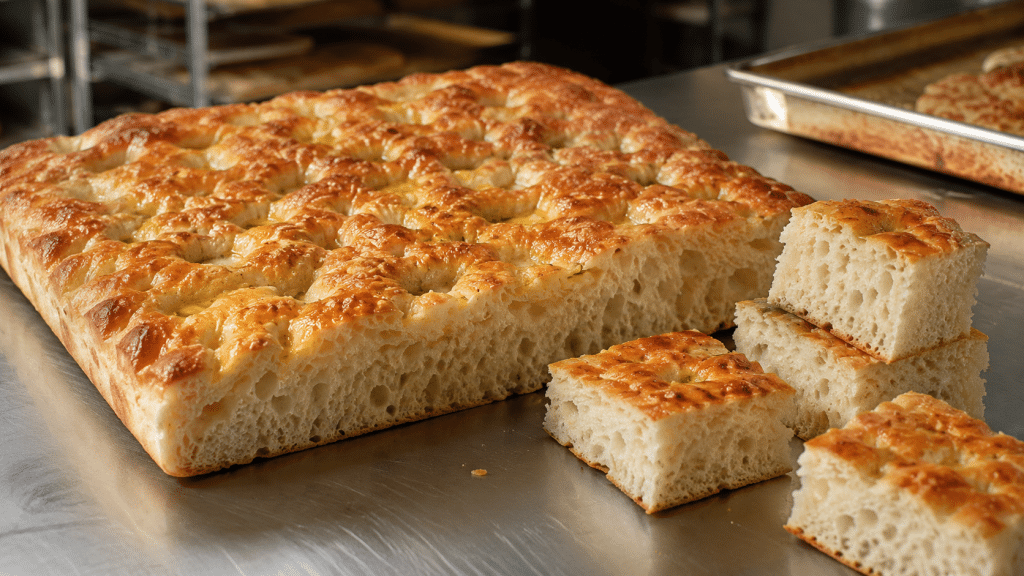
Focaccia works especially well with foods that benefit from a savory, tender bread: soups, salads, cheeses, dips, roasted vegetables and cured meats. The ideal pairing depends on the bread’s seasoning, thickness and richness. Plain focaccia is flexible, while herb- or vegetable-topped focaccia is best matched with flavors that do not compete with its toppings. For an explanation of the bread’s ingredients and texture, see what focaccia is.
At a Glance
Key Takeaways
- Pair lightly seasoned focaccia with soups, salads, olive oil, cheeses and antipasti.
- Use strongly seasoned focaccia with simpler accompaniments so flavors remain balanced.
- For sandwiches, choose fillings that fit the bread’s thickness and moisture tolerance.
- Restaurants can use one suitable focaccia format in multiple menu positions, but should test portion and holding performance.
Focaccia with soups
Warm focaccia pairs naturally with tomato soup, minestrone, vegetable soups and bean-based soups. Its tender crumb works well for dipping. A simply seasoned piece is usually more versatile than focaccia with several strong toppings; serve small portions so the bread complements rather than overwhelms the bowl.
Focaccia with salads
Try focaccia with tomato and mozzarella salad, chopped vegetables, leafy green salads or a bean salad. The bread adds texture and substance without requiring a separate sandwich. A salad with a strong acidic dressing can balance the olive-oil richness of the bread.
Cheese and antipasti
Mozzarella, ricotta, burrata and harder aged cheeses all provide different contrasts with focaccia. Pair mild bread with more distinctive cheese, or more strongly seasoned bread with a simple cheese. Roasted peppers, olives, artichokes and other antipasti can turn a few small pieces of focaccia into a shareable starter.
Dips and spreads
Olive oil, whipped ricotta, white bean dip, hummus and tomato-based spreads are familiar options. To avoid a greasy or soggy serving, offer the dip on the side and let guests portion it. If the focaccia itself is generously oil-finished, a brighter or lighter spread can create better balance.
Vegetables and roasted dishes
Roasted eggplant, peppers, zucchini, mushrooms or tomatoes pair well with focaccia. For an assembled sandwich or open-faced serving, drain very wet ingredients and test whether the bread remains comfortable to eat after standing. For a plated meal, use a simpler side portion with olive oil or herbs.
What proteins go well with focaccia?
Prosciutto, grilled chicken, turkey and other savory proteins can work with focaccia, particularly alongside greens or a lightly acidic spread. Serving size matters: heavy fillings can overwhelm thin, delicate focaccia, while very thick bread can dominate modest fillings. Match the bread to the final bite rather than relying on a generic pairing list. For structural considerations beyond flavor, review our sandwich-focused focaccia guide.
Focaccia for breakfast and lunch
For breakfast, toasted focaccia may accompany eggs or a simple savory spread. For lunch, use it with tomato, mozzarella, greens, roasted vegetables or proteins. For grab-and-go service, test packaging and holding time before introducing a filled product, and follow food-safety requirements for perishable fillings. Bread that will be held for later service also benefits from appropriate focaccia storage.
Pairing ideas by menu application
| Serving occasion | Pairing idea | Why it works |
|---|---|---|
| Starter | Plain focaccia with whipped ricotta and roasted peppers | Creamy and savory contrast |
| Soup service | Focaccia portion with tomato or bean soup | Bread suited for dipping |
| Lunch | Focaccia with mozzarella, tomato and greens | Fresh, balanced flavors |
| Sharing board | Focaccia with cheese, olives and vegetables | Varied textures in small portions |
| Catering | Pre-portioned focaccia with dips served separately | Easier portion control and texture management |
How to choose the right focaccia for a pairing
Start with the bread already being served. Is it plain, salted, herb-finished or topped? Is the piece thin and easy to tear, or thick enough to split? Will the guest eat it warm, chilled or after a period in packaging? Let those details inform the food pairing. For restaurant menus, consistency of portion size and handling is just as important as flavor. If you are choosing between different breads, see focaccia compared with ciabatta.
A note on sandwiches
Focaccia can make a satisfying sandwich, but selecting sandwich bread involves structural questions beyond pairing flavors. For deeper guidance on bread thickness, moisture and fillings, read “Is Focaccia Good for Sandwiches?” rather than using this pairing guide as a substitute.
For Foodservice Businesses
Planning a focaccia application for your menu?
Share the concept, fillings, portion size, and service style with Il Forno. The catalog includes multiple focaccia formats that can be evaluated around the actual dish rather than a generic bread category.
Request Wholesale Focaccia Information