

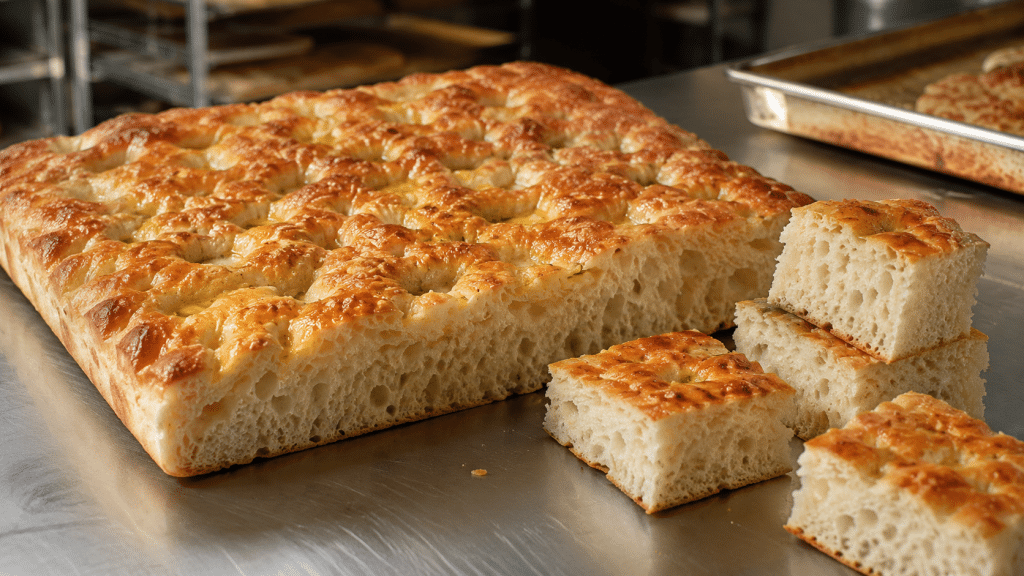
At a Glance
Key Takeaways
- Focaccia is an Italian-style flatbread made from a yeast-leavened dough that is typically enriched and finished with olive oil.
- Its defining traits are a relatively flat shape, dimpled surface, tender interior, and an exterior that can range from soft to lightly crisp depending on the format and bake.
- Focaccia can be served as table bread, cut into portions, used for sandwiches, or built into catering and grab-and-go programs.
- Format matters: a bread that works well for a sandwich program may be different from the focaccia a restaurant wants for table service.
- Il Forno’s wholesale catalog includes several focaccia and focaccia-roll formats for professional kitchens.

What Is Focaccia Bread? Texture, Ingredients & Uses
Focaccia is an Italian-style, yeast-leavened flatbread typically made with flour, water, yeast, salt and olive oil. It is known for a relatively flat shape, dimpled surface and soft interior. Depending on the formula and format, its crust may be tender or lightly crisp. Focaccia can be enjoyed as bread on its own or used as part of sandwiches, appetizers and catered meals. For a side-by-side bread comparison, see focaccia vs. ciabatta.
What is focaccia made from?
Most focaccia recipes start with flour, water, salt, a leavening agent such as yeast, and olive oil. Herbs and toppings can be added, but are not necessary. Flour choice, hydration, fermentation, oil quantity and baking setup influence the result. There is no single focaccia style that all bakeries produce.
Why does focaccia have dimples?
Bakers press their fingertips into the dough before baking to create shallow pockets across the surface. These dimples help distribute oil and toppings and give focaccia its recognizable appearance. The dough must also be handled carefully so the interior does not become unnecessarily dense.
What does good focaccia feel like?
Focaccia often has a tender, somewhat springy crumb and a flavorful surface. A table-service focaccia may be light and airy, while sandwich focaccia can benefit from a more even crumb and consistent thickness. “Good” is therefore tied to purpose: a dramatic open crumb is not always best for holding wet ingredients or tightly wrapping sandwiches.
How focaccia is made
The general process includes mixing, fermentation, shaping, proofing, dimpling, adding oil or seasonings and baking. Variations in hydration, fermentation time and pan conditions affect the thickness, chew, browning and openness of the crumb. Avoid assuming that a particular method applies to every Il Forno product unless the bakery confirms it.
Different Focaccia formats
| Format | Possible use | Decision factor |
|---|---|---|
| Flat sheet or rectangular portion | Bread baskets, catering, sandwiches | Consistent cuts and surface toppings |
| Round or individual portion | Single-serve applications | Finished serving size |
| Pocket or sandwich-oriented format | Stuffed or filled meals | Openability and moisture hold |
| Seasoned focaccia | Appetizers and pairings | Whether toppings complement the dish |
Il Forno’s catalog includes named focaccia variants such as Focaccia Quadrata, Mini Focaccia, Focaccia Pocket, Focaccia Romana, Focaccia Round and Focaccia Corto. Product availability and specifications should always be confirmed before publication or ordering.
What is focaccia used for?
Focaccia can accompany soups, salads and dips; it can be served warm in portions or used as the bread for a sandwich. In catering, it may be cut into small bites or built into tray-ready portions. Its versatility does not mean every style works in every setting: select the right thickness and seasoning for the finished dish.
Is focaccia good for sandwiches?
Yes, when the format is appropriate. Sandwich focaccia should be easy to split or layer, substantial enough for the fillings, and comfortable to eat. Test wet vegetables, spreads, proteins and any warming step together. See the dedicated sandwich guide for application-specific details rather than repeating that entire discussion here.
Focaccia versus ciabatta
Focaccia is commonly oil-finished, flatter and softer; ciabatta more often has an open crumb and a chewier crust. Both can make excellent sandwiches, but their best use depends on the exact product. The side-by-side “Focaccia vs. Ciabatta” article explains the comparison in more detail.
Choosing focaccia for restaurant service
Determine the intended cut size, whether the bread will be reheated, how long it will wait before serving, and whether customers will eat it with utensils or as a handheld item. For a wholesale order, also consider portion consistency, packaging and delivery cadence. Product testing is more reliable than selecting by the label alone. For serving inspiration, explore what to eat with focaccia.
Frequently Asked Questions
Is focaccia a type of bread or pizza?
Focaccia is a bread. Some versions resemble pizza because they are flat and may carry toppings, but their usual preparation and use differ.Does focaccia contain olive oil?
Olive oil is characteristic of many focaccia recipes, though the amount and whether it is included in the dough or finish can vary.Is focaccia soft or crispy?
Focaccia is typically flatter and more oil-forward, while ciabatta is usually formed as a loaf or roll with a chewier crust and open crumb. Both can work for sandwiches, but they create a different eating experience.Is focaccia served hot or cold?
Either. It can be served warm as bread service, room temperature in some sandwich applications, or toasted and pressed. The best service temperature depends on the product and menu use.How do restaurants keep focaccia from drying out?
The first step is limiting unnecessary air exposure and matching storage to the product and toppings. Kitchens should also avoid overheating it during reheating because repeated or aggressive heat can dry the crumb.Does Il Forno sell wholesale focaccia?
Il Forno’s current bread catalog lists multiple focaccia and focaccia-roll formats. Availability, pricing, minimums, samples, and delivery eligibility are reviewed through the wholesale inquiry process.Looking for Fresh Bread for Your Business?
Explore Il Forno Bakery’s selection of breads and foodservice options.
Learn More