

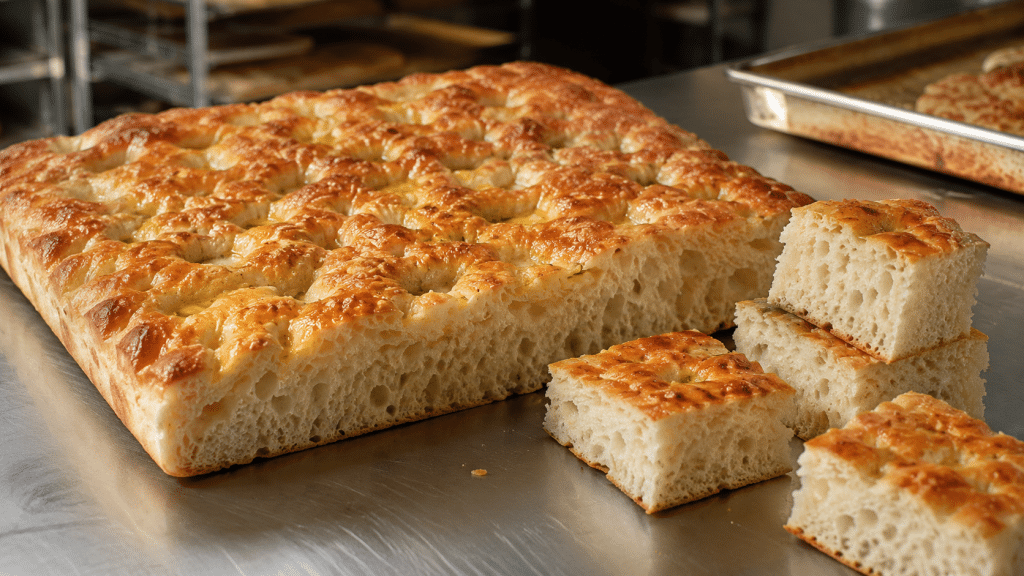
The best way to store focaccia depends on whether it is plain bread or has perishable toppings or fillings, when you plan to serve it and whether you intend to reheat it. For plain focaccia intended for near-term use, reducing air exposure is important. If the finished food contains ingredients that require refrigeration, food safety takes priority over the bread’s preferred texture.
At a Glance
Key Takeaways
- Keep plain focaccia adequately wrapped or covered to slow drying and staling.
- Do not treat topped or filled focaccia like plain bread: follow applicable food-safety requirements for perishable ingredients.
- Refrigeration can accelerate bread firming even though it is essential for certain prepared foods.
- Freezing can preserve quality for later use when properly packaged and handled.
- FReheating can improve texture but cannot make spoiled bread safe.
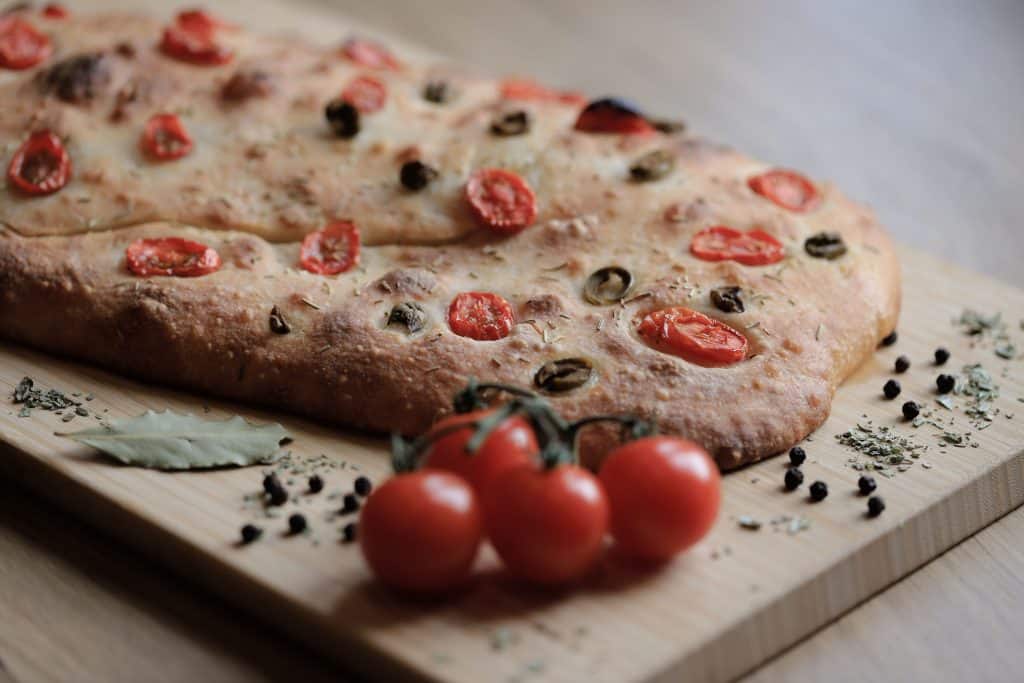
Why does focaccia lose freshness?
After baking, bread changes as moisture redistributes and starches reorganize. The crumb can become firmer even when it has not visibly dried out. Once focaccia is cut, its exposed surfaces become more vulnerable to drying. Good storage reduces air exposure and avoids crushing or trapping excessive surface moisture. Learn more about the bread itself in our focaccia guide.
How to store plain focaccia for near-term use
For plain focaccia without perishable toppings, allow it to cool appropriately and keep it in clean, suitable food-safe packaging that limits air exposure. A cool, dry room-temperature location is often preferable for short-term eating quality. Avoid leaving cut portions exposed on prep counters. The suitable holding duration depends on the product, room conditions and business practices; the bakery should confirm any product-specific recommendation. If serving focaccia with other foods, review the pairing guide.
When focaccia needs refrigeration
Focaccia with perishable cheese, meat, prepared vegetables or fillings must be handled according to the food-safety requirements for the finished food. A sandwich assembled with refrigerated components may need refrigeration even though refrigeration can make the bread firmer. Follow the food establishment’s approved food-safety procedures and applicable local rules; do not use a generic room-temperature bread guideline to determine the safety of a prepared item.
Whole pieces versus pre-cut focaccia
A whole portion exposes less crumb than several pieces cut in advance. When practical, portion the bread nearer service. If pre-cutting is essential, cover pieces promptly and choose packaging that protects them without crushing their structure or creating excessive condensation.
Can you freeze focaccia?
Yes. Freezing is a practical option when you will not use plain focaccia promptly. Freeze portions while the bread is still in good condition, package against air exposure and label them for stock rotation. Thaw under appropriate conditions, especially for topped or filled products. Freezing slows deterioration while frozen; it does not restore quality that was already lost.
How to reheat focaccia
For a crisper surface, an oven or toaster oven is often a useful option. Use a moderate approach suited to piece thickness and existing moisture; avoid overheating, which can harden the crust before the center warms evenly. Actual time and temperature depend on the product and equipment, so a foodservice kitchen should develop a tested procedure rather than relying on one universal setting.
A practical storage decision table
| Situation | Recommended approach | Main concern |
|---|---|---|
| Plain focaccia, near-term use | Protect from air at suitable room temperature | Drying and staling |
| Cut plain focaccia | Cover promptly; cut closer to service when possible | Exposed crumb |
| Perishable toppings or fillings | Follow applicable chilled-holding procedures | Food safety |
| Plain focaccia for later use | Package and freeze promptly | Quality loss and freezer exposure |
| Focaccia with visible mold | Discard; do not refresh by heating | Food safety |
Storage for restaurants, cafes and caterers
Storage starts at ordering. Choose quantities and delivery cadence that align with expected sales, prep and service windows. Determine when bread is portioned, whether it is used plain or filled, and whether it will be served hot. The best operational plan balances product quality, inventory waste and compliance with established food-safety procedures. To compare available bakery formats, see Il Forno’s focaccia range.
Signs that focaccia should be discarded
Discard bread with visible mold or other evidence of spoilage, and follow your food-safety procedures for any product that has been improperly handled. Reheating stale bread may change its texture; it does not make spoiled bread safe. Do not rely on smell alone to determine food safety.
For restaurants and foodservice buyers
Need focaccia formats and ordering quantities better matched to service?
Explore the current Il Forno bread catalog to compare available formats. For wholesale product, account, or delivery questions, submit a quote inquiry; availability and route eligibility are confirmed by the bakery.
Explore Wholesale Bread Contact Us