

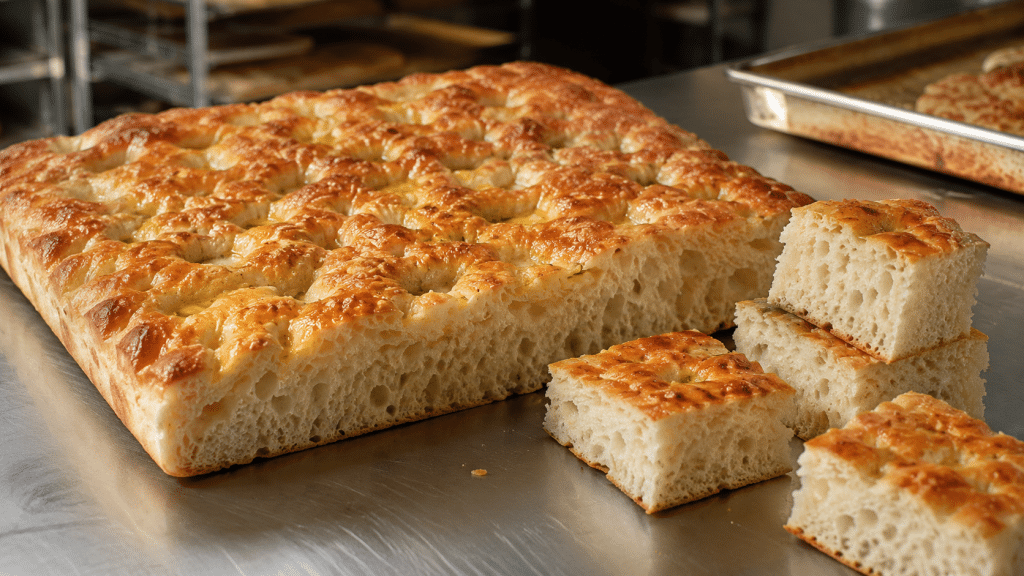
At a Glance
Key Takeaways
- An oven or toaster oven gives the best control for warming focaccia while restoring the exterior.
- Moderate heat is usually more useful than blasting the bread at very high temperature.
- The thicker the focaccia, the more important it is to warm the center without over-drying the crust.
- A microwave is fast but tends to soften the exterior and can make the crumb tough if overheated.
- For restaurant service, test the exact portion size, starting temperature, equipment, and hold time rather than relying on one universal reheating time.
How to Reheat Focaccia: The Short Answer
For most focaccia, an oven or toaster oven is the most reliable reheating method. Place the bread in a moderate oven and warm it only until the center is heated and the surface has recovered the texture you want. For many portions, a temperature around 350°F is a useful starting point, but thickness and equipment matter more than a rigid number of minutes.
The main mistake is treating focaccia like something that needs to be “re-baked.” It does not. It needs enough heat to refresh the bread without driving out the remaining moisture.
Why Reheated Focaccia Can Turn Dry
Heat moves moisture. If a piece of bread stays in the oven too long, the surface can become crisp while the interior loses the tenderness you were trying to restore. Thin portions dry especially quickly.
Starting condition matters too. Focaccia that was stored uncovered will need a different approach from well-covered bread. Reheating can improve texture, but it cannot fully replace moisture that has already been lost.
Best Method: Reheating Focaccia in the Oven
Use a preheated moderate oven, place the focaccia on a tray or directly on an appropriate baking surface, and check it early. A little surface oil can help restore the familiar focaccia finish when appropriate for the product.
For restaurant service, warm the amount you expect to use rather than repeatedly heating and cooling the same batch. Smaller cycles give the kitchen better control over quality.
Using a Toaster Oven
A toaster oven is useful for individual portions because it heats quickly and can restore the exterior better than a microwave. The trade-off is that the top heating element may be close to the bread, so topped focaccia can brown before the center is warm.
Lower the rack or reduce the heat if the surface is coloring too fast. The goal is an even warm-through, not extra browning for its own sake.
Reheating Focaccia in a Skillet
A skillet is helpful when the kitchen wants to crisp the bottom of a smaller piece. Use moderate heat and cover briefly if the center needs help warming. This method is especially useful for sandwich builds where the cut surface or bottom crust needs texture.
Watch oil carefully. Focaccia already contains or carries oil, so an overly hot pan can turn a refresh into frying.
Can You Microwave Focaccia?
Yes, but it is the least forgiving method. A microwave warms the interior quickly while leaving the exterior soft. Too much time can make the crumb rubbery or tough as it cools.
Use it when speed matters more than crust texture, and work in very short intervals. For a finished restaurant item, an oven or press is usually easier to control.
How to Reheat Frozen Focaccia
Frozen focaccia can be thawed before reheating or warmed from frozen, depending on thickness and the service plan. Thawing first gives the kitchen more even control. Heating from frozen can work for smaller portions but usually needs a lower, longer warming phase so the center catches up with the exterior.
Package removal matters: do not place plastic wrap or non-oven-safe packaging into the oven. Transfer the bread to an appropriate tray or container before reheating.
Reheating Focaccia Sandwiches
Once focaccia becomes a sandwich, the filling changes the problem. Cheese, meat, vegetables, and sauces heat at different rates. The bread may be ready before the center of the sandwich is warm—or the filling may release moisture that softens the crumb.
Test the completed sandwich using the same press, oven, wrap, and hold time used during service. That is more useful than optimizing the bread in isolation.
Reheating for Restaurant and Catering Service
High-volume service rewards repeatability. Record the portion size, starting temperature, equipment setting, tray load, and approximate warm-up window that works for your product. That turns a “feel” task into a station standard.
For catering, consider whether the bread will be refreshed on-site or at the commissary. A product that leaves the kitchen perfect but sits covered for an hour may arrive with a different texture than expected.
| Method | Best for | Main trade-off |
|---|---|---|
| Oven | Multiple portions, table service, catering prep | Takes longer but gives strong control |
| Toaster oven | One or a few portions | Surface can brown quickly |
| Skillet | Crisping a bottom or cut surface | Requires attention and smaller batches |
| Microwave | Fast individual warming | Softens exterior; easy to overheat |
For Foodservice Businesses
Need focaccia that works with your service method?
Tell Il Forno whether the bread will be served warm, toasted, pressed, portioned for catering, or used in sandwiches. That information helps narrow the wholesale format to the job.
Frequently Asked Questions
What is the best way to reheat focaccia?
An oven or toaster oven usually gives the best balance of a warm interior and restored exterior texture. Use moderate heat and check the bread before it dries.
What temperature should you use to reheat focaccia?
Around 350°F is a practical starting point for many portions, but thickness, starting temperature, toppings, and equipment all affect the result. Test your specific product.
Can you microwave focaccia?
Yes. Use short intervals. The microwave warms quickly but usually softens the crust and can make the crumb tough if overheated.
Can you reheat focaccia from frozen?
Yes. Smaller portions can often be warmed from frozen, while thicker pieces are easier to control if thawed first. Make sure all packaging is oven-safe or removed before heating.
How do you reheat focaccia without making it hard?
Use moderate heat, avoid excessive time, and start with bread that has been stored well. Overheating is one of the easiest ways to dry the crumb.
Should focaccia be reheated before serving?
Not always. Some applications work at room temperature. Warm focaccia can be especially effective for table service, but the ideal temperature depends on the menu and product format.